9 min read
Ivica Čardić
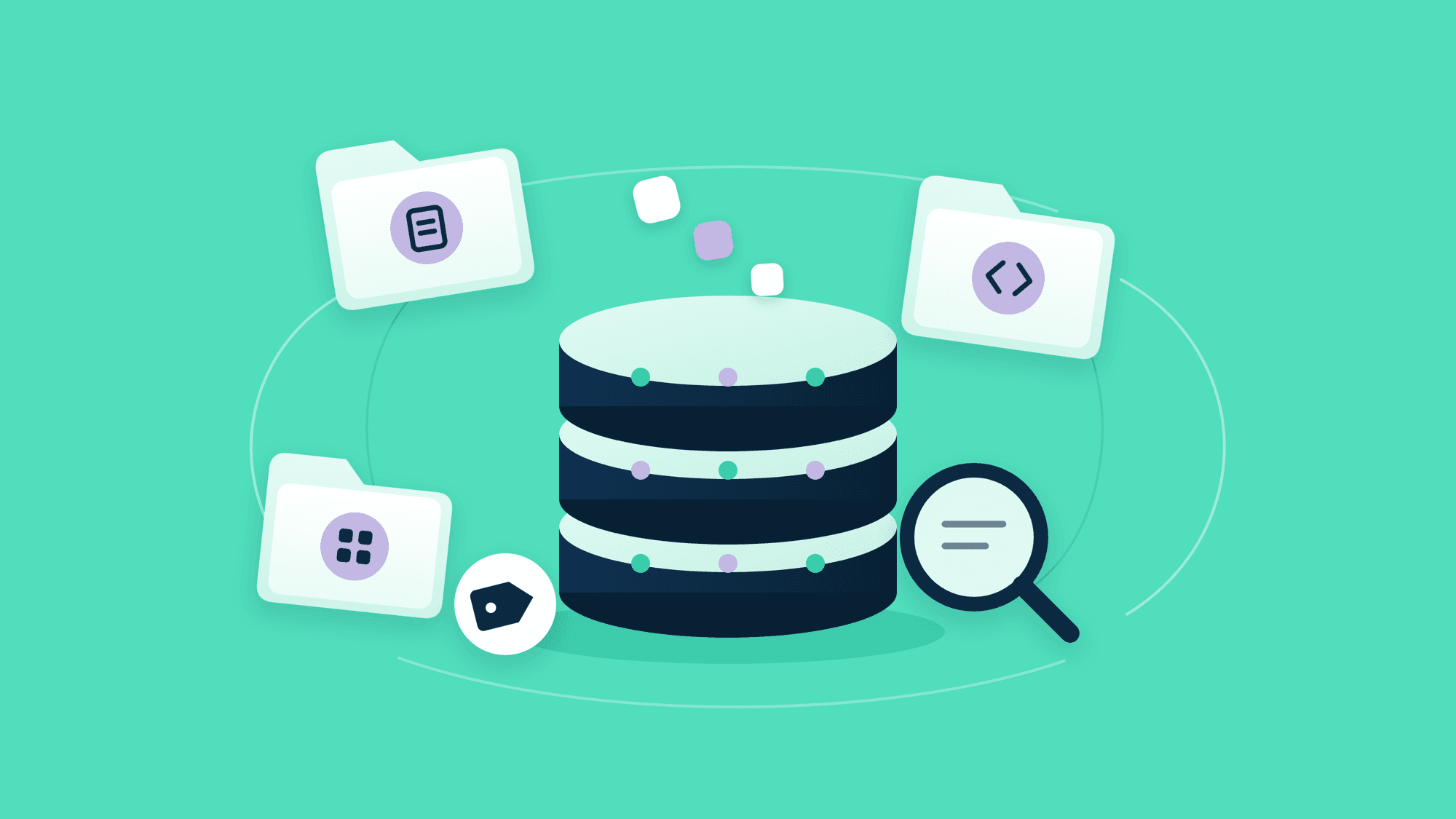
TL;DR: A Knowledge Base in ByteChef is a managed RAG store: drop in documents (PDF, Markdown, Word, JSON, plain text - and scanned PDFs or images, through an OCR path) and ByteChef parses, chunks (with size and overlap you pick per knowledge base), embeds, and indexes them in a pgvector-backed Spring AI
VectorStore. Retrieval is everywhere you'd want it: a Knowledge Base Search tool for AI Agents (with tag filtering), Load/Search/Update/Delete actions for workflows, and a built-in search interface for testing. Keeping the index current is yours to drive - re-run an ingestion workflow on whatever schedule you like - and the part to plan for deliberately is upstream deletes, which no refresh can spot on your behalf.
Every team building with agents arrives at the same sentence: "It should know our stuff." The product docs. The runbooks. The policy PDFs. And the standard answer - RAG, retrieval-augmented generation - is conceptually simple: chunk the documents, embed the chunks, search by similarity, hand the best matches to the model.
The concept is a weekend. The operation is a project. Someone has to parse five file formats, pick chunk sizes, run an embedding model, host a vector database, keep the index in sync when the source-of-truth changes - and notice when a document is deleted upstream, because a knowledge base that confidently serves stale policy is worse than none at all. That's the gap between a RAG demo and a RAG system. ByteChef's Knowledge Base closes most of it for you - and this post is honest about the part it leaves to you.
In ByteChef, a Knowledge Base is a first-class object with its own home in the workspace: a named store of documents, each broken into chunks, each chunk embedded and indexed for semantic search. The layering is straightforward:
CL100K_BASE, the same encoding GPT-4 uses, and prefers to break on sentence punctuation rather than mid-thought.PgVectorStore over a pgvector-enabled PostgreSQL database, built with the platform's configured EmbeddingModel and indexed with HNSW over cosine distance. There's no proprietary vector service to sign up for and no new operational vocabulary to learn: it's Postgres, backed up and monitored like the rest of your Postgres, and ByteChef creates and maintains the schema, the index, and the per-knowledge-base partitioning for you.And in the Knowledge Base workspace, none of this is a black box. You can open any document and inspect its individual chunks - and edit them, because sometimes the fix for a bad retrieval is one badly split paragraph - watch a document's indexing status, and, before any agent ever touches it, try queries against the KB in a built-in search interface to see exactly what retrieval returns.
There are three doors in, matched to three situations:
Whichever door you use, everything downstream is identical - parse, chunk, embed, index. What differs is who pushes the button, and how often.
An index is a snapshot, and snapshots rot. Re-running ingestion is the easy half: put the Load Data workflow on a schedule and new and changed documents flow in on whatever cadence suits the material - nightly for a handbook, hourly for a status page.
The hard half is the one that quietly poisons RAG systems: deletions. A refresh that asks the upstream for "everything that changed since Tuesday" gets back the records that still exist - never the ones that vanished. Left alone, a document deleted at the source lives on in your knowledge base indefinitely, still retrieved, still quoted by your agent, long after somebody retracted it.
That half is yours to own today - ByteChef has no "connect a source and forget it" option that derives deletions for you. It's worth owning deliberately rather than discovering later, and the shape of the fix is simple enough: tag each ingested document with its upstream id, and on the runs where you can enumerate the full current upstream set, use the Delete Documents action - it removes documents by metadata filter - to drop whatever is no longer in it. Unglamorous, and far cheaper than the alternative, which is an agent confidently citing a policy that was withdrawn a month ago.
A knowledge base earns its keep at retrieval time, and ByteChef exposes it on every surface:
One store, several ways in and out - and because retrieval is tag-filterable, a single knowledge base can serve multiple audiences ("customer-facing" vs. "internal-only") without maintaining parallel copies.
If you want to tune retrieval itself - query rewriting, expansion, custom joins over several stores - that's a different layer: ByteChef's RAG cluster elements, which work over any vector store you like. The Knowledge Base is the batteries-included end of the same spectrum: you don't configure retrieval, you just ask it questions.
By now you know the shape of this section. The primitives are Spring AI's; the product around them is ByteChef's:
PgVectorStore + EmbeddingModel are yours to configure and operate → ByteChef owns the schema, the HNSW index, and the per-knowledge-base partitioning.Same foundation as everything in this series - Spring AI under the hood - with the operational half of RAG, the half that actually hurts, absorbed into the platform.
If you're self-hosting, the Knowledge Base ships disabled - two switches turn it on:
bytechef:
  ai:
    knowledge-base:
      enabled: true
    vectorstore:
      provider: pgvector
      pgvector:
        url: jdbc:postgresql://localhost:5433/bytechef_vectorstore
        username: postgres
        password: postgres
That second block is the part worth planning for. The vector index lives in its own pgvector-enabled PostgreSQL database, separate from ByteChef's application database - the development compose file runs one for you alongside the main Postgres, and in production it's a second database to provision, monitor, and back up. Still Postgres, still nothing exotic, but not the same Postgres. ByteChef creates the schema and the index inside it on first use.
One more prerequisite, easy to miss: an embedding model has to be active for the environment. Without one there's nothing to turn chunks into vectors with, and the Knowledge Base page says so outright rather than quietly indexing nothing.
The distance between "agents are impressive" and "agents are useful here" is almost always knowledge - your documents, your data, your vocabulary. RAG closes that distance in principle; in practice it comes bundled with a parsing zoo, a vector database, an embedding budget, sync jobs, and the deletion problem nobody budgets for.
ByteChef's Knowledge Base packages most of it: documents in through upload, a workflow action, or an agent; chunks and vectors in pgvector; retrieval exposed as agent tools, workflow actions, and a human search box. What stays with you is the refresh policy - how often to re-run ingestion, and what to do about the deletes. Your agents get something to know, and you skip almost all of the machinery of knowing.
Have a folder of PDFs your agent should be quoting? Open ByteChef, create a Knowledge Base, drop them in, and attach the Knowledge Base Search tool to your agent.
Get the latest guides on complex automation, AI agents, and visual workflow best practices delivered to your inbox.